
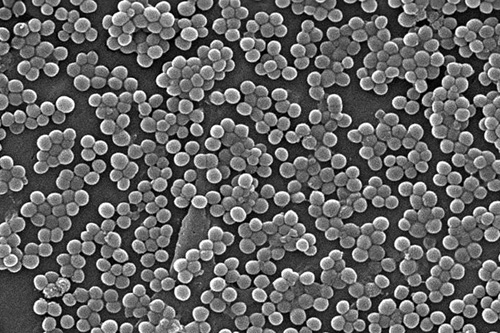
SCIENTISTS have shed new light on the way superbugs such as MRSA are able to become resistant to treatment with antibiotics.
Researchers have mapped the complex molecular structure of an enzyme found in many bacteria. These molecules – known as restriction enzymes – control the speed at which bacteria can acquire resistance to drugs and eventually become superbugs.
The study, carried out by an international team including scientists from the University of Edinburgh, focused on E. coli, but the results would apply to many other infectious bacteria.
After prolonged treatment with antibiotics, bacteria may evolve to become resistant to many drugs, as is the case with superbugs such as MRSA.
Bacteria become resistant by absorbing DNA – usually from other bugs or viruses – which contains genetic information enabling the bacteria to block the action of drugs. Restriction enzymes can slow or halt this absorption process. Enzymes that work in this way are believed to have evolved as a defence mechanism for bacteria.
The researchers also studied the enzyme in action by reacting it with DNA from another organism. They were able to model the mechanism by which the enzyme disables the foreign DNA, while safeguarding the bacteria’s own genetic material. Restriction enzymes’ ability to sever genetic material is widely applied by scientists to cut and paste strands of DNA in genetic engineering.
The study was carried out in collaboration with the Universities of Leeds and Portsmouth with partners in Poland and France. It was supported by the Biotechnology and Biological Sciences Research Council and the Wellcome Trust and published in Genes and Development journal.
Dr David Dryden, of the University of Edinburgh’s School of Chemistry, who led the study, said: “We have known for some time that these enzymes are very effective in protecting bacteria from attack by other species. Now we have painted a picture of how this occurs, which should prove to be a valuable insight in tackling the spread of antibiotic-resistant superbugs.”